Introduction
Veterinary radiology is one of the pillars of diagnostic imaging in animal medicine. Its correct understanding does not depend solely on obtaining a radiographic plate, but on mastering the physical principles that allow for the precise interpretation of each observed shade.
X-rays interact with animal tissues differentially, generating absorption patterns that translate into diagnostic images. Understanding these principles is essential to avoid interpretation errors and maximize the clinical value of conventional radiography.
This article develops, in a structured way, the physical foundations of veterinary radiology, the formation of the radiographic image, radiographic densities, and the factors that determine X-ray absorption, establishing a solid basis for diagnosis in domestic animals.
1. What is Veterinary Radiology?
Veterinary radiology is the branch of medical sciences responsible for the diagnostic and therapeutic application of radiant energy, particularly X-rays (Roentgen rays), in the study of animal diseases.
In the clinical field, its primary purpose is to visualize bone structures and soft tissues, identify morphological alterations, and support diagnostic and therapeutic decision-making.
Despite the advancement of techniques such as tomography or magnetic resonance imaging, conventional radiography remains a fundamental diagnostic tool due to its accessibility, speed, and efficiency.
2. X-rays in Animals: Fundamental Physical Principles
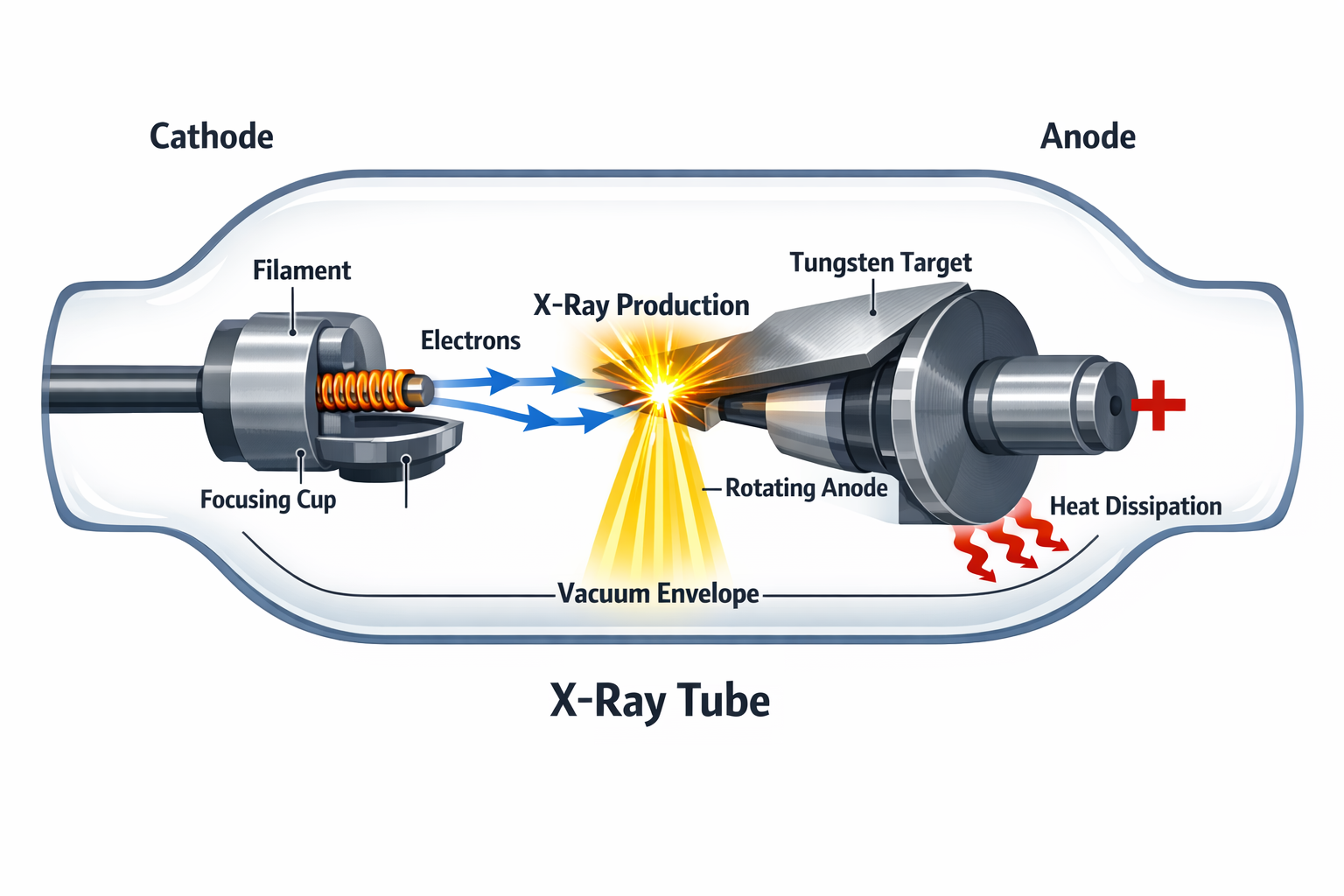
X-rays are short-wavelength electromagnetic waves characterized by their high energy content and high penetration power in biological tissues.
When the primary beam strikes the animal's body, a key physical phenomenon occurs: differential absorption. Part of the radiation is absorbed by the tissues, and part passes through the body, reaching the film or digital detector. This difference in absorption is the basis of the radiographic image.
3. Radiographic Image Formation
A radiograph is a representation of the number and distribution of X-rays that pass through the patient and reach the receptor system. The process includes:
- Emission of the beam from the X-ray machine.
- Interaction of the beam with the patient's tissues.
- Differential capture of radiation on the film or detector.
- Development or digital processing of the image.
When observing the radiographic plate, black, white, and multiple shades of gray are identified. These shades represent the physical behavior of tissues in response to radiation.
4. Radiolucency and Radiopacity: Interpretation of the Radiographic Image
4.1 Radiolucent Image (Radiotransparent)
The black areas of the radiograph correspond to structures that allow X-rays to pass through without significant absorption. Example: Pulmonary air and gas-filled cavities. They have low physical density and appear dark.
4.2 Radiopaque Image
The white areas represent tissues that absorb a higher proportion of X-rays. The greater the absorption, the less radiation reaches the detector. Example: Bone, metal, and positive contrast substances.
5. Factors Influencing X-ray Absorption
5.1 Physical Density of the Tissue (g/cm³): Higher density results in higher absorption. Bone tissue absorbs more X-rays than muscle due to its higher mineral density.
5.2 Atomic Number: Tissues with elements of a higher atomic number absorb more radiation. This principle explains the use of barium sulfate as a positive contrast medium.
5.3 Tissue Thickness: Thicker structures absorb a greater amount of radiation. Therefore, the patient's positioning directly influences the radiographic shade.
6. Radiographic Densities in Veterinary Medicine
This scale constitutes the basis for the systematic interpretation of any radiographic study:
7. Systematic Evaluation of a Veterinary Radiograph
A radiographic image only has diagnostic value if it is analyzed in an orderly manner. The evaluation must consider: technical quality, contrast level, positioning, sharpness, and correct anatomical identification. Systematic analysis reduces interpretative errors and increases diagnostic precision.
8. Clinical Application in Small and Large Animals
Understanding densities is fundamental in: diagnosing fractures, evaluating pulmonary pathologies, identifying gastrointestinal foreign bodies, orthopedic studies in equines, and detecting abdominal alterations.
9. Common Errors in Radiographic Interpretation
- Confusing structural overlap with real lesions.
- Failing to consider the thickness of the tissue being evaluated.
- Incorrectly interpreting physiological radiolucent zones.
- Failing to correlate findings with the patient's clinical signs.
Conclusions
Veterinary radiology is based on precise physical principles. Identifying the five radiographic densities constitutes the foundation of diagnostic imaging, strengthening clinical decision-making in domestic animals.